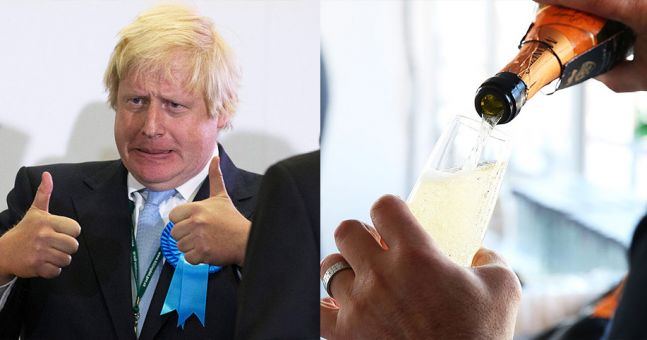
“I said, ‘Maybe we’re going to lose some Prosecco; you’re going to lose some fish and chips exports. The difference is I’m going to lose [exports] to one country, you to 27.’
“Putting things on this level is a bit insulting.”
With this withering put-down, Italy’s economic development minister destroyed one of the key planks of the Leave campaign – “They need us more than we need them”.
How many times did you hear a Brexiteer airily reassuring voters that of course we could leave the EU but still have tariff-free access to the Single Market because “We buy German cars, we buy French wine…are they really going to want to damage their own economies?”
Well, yes, apparently, because actually damage to EU nations individually is going to be fairly limited, if at all. The “they need us more than we need them” argument was always founded on dodgy economics – because we import more from the EU than we export to them (about 44% of UK exports go to EU countries while about 53% of our imports are from the EU). But what this argument ignores is that those imports only account for about 13% of all exports from the EU – so they can afford to lose a portion of this activity, while maintaining trade within the remaining EU nations. It’s also missing the bigger picture, that there are huge gains to be made for EU nations from harming the UK’s trading power – grabbing a slice of our huge financial sector, for example, or poaching some of the foreign investment that has come to the UK thanks to our access to the rest of the EU – Nissan, for example.
And yet they go on doing it – Johnson’s comment about prosecco was made a full five months after the referendum, by which point surely the message should have hit home. But no, those entrusted to carry out this most enormous of tasks still seem incapable of grasping the complexities of it. David Davis began his role as Minister for Brexit by tweeting that we first need to make a free-trade deal with Germany – seemingly oblivious that trade deals are conducted with the EU as a whole rather than individually with member states. On BBC’s Question Time, Jacob Rees-Mogg airily commented that any tariffs applied to imports would be wiped out by the fall in the value of the pound, apparently confused that a weaker pound equates to more expensive imports, not less. Some have suggested that we should simply offer the EU a take-it-or-leave-it free-trade deal as they are so desperate for our custom, as if that is any way to handle trade negotiations in a modern economy. Liam Fox, International Trade Secretary, says that trade with the EU post-Brexit will be “at least as free” as it is now, imagining some utopian vision of trade that is even freer than the Single Market – and if this doesn’t come to pass, it’s all the fault of the UK business community who are too fat and lazy to make it happen.
There would be some satisfaction in seeing these career bullshitters clumsily blundering and blustering around now that they have actually been tasked with realising their snake-oil promises, if this were some trivial sideshow. But it isn’t, the stakes really could not be higher – this is the future of our nation at stake, and it’s no longer the time for idle promises and evocations of former glories. We need details and specifics and proper engagement with the complexity of the task if there is to be the slightest chance of a positive outcome. And if you voted Leave, believing these charlatans’ promises of the sunlit uplands outside of the EU, the people who you put your faith in are letting you down unforgivably.
 Citizens Of The World